In the complex landscape of personal finance, your credit score is the reliable compass that guides you through this wild financial world. But what the heck is credit, anyway? Put simply, credit is an agreement between a creditor (lender) and a borrower to repay funds, usually with interest. Essentially, the lender credits the borrower money, which the lender must repay over time.1
Now, let’s shed light on the unsung hero of fiscal responsibility: the beacon that is our credit score. When it comes to your credit score, it shows lenders that you can pay back the funds you borrow. It’s a dynamic force influencing our choices, the opportunities we seize, and the financial doors that either swing open or remain firmly closed.
There is so much information regarding credit that navigating what’s really important can be challenging. So, fasten your seatbelts as we embark on a journey to understand why good credit isn’t just a feather in the financial cap – it’s the fabric that weaves the story of our economic well-being.
Decoding the Credit Landscape: What is Credit?
As mentioned above, credit is a financial arrangement in which a borrower receives something of value, typically money, goods, or services, with the understanding that they will repay the lender at a later date. Credit can include things like:
Loans
Lines of Credit
Credit Cards
Student Loans
Mortgages
You may wonder how lenders gauge the financial responsibility of the borrower. The simple answer is your credit score!
At the heart of the credit game lies the concept of creditworthiness, a secret code deciphered through the magic of a credit score. This number taps into a mix of financial elements — think payment history, credit utilization, the length of your credit history, the variety of credit you have, and new credit. Imagine it as a story of financial success, where having a great credit score makes you a money expert, effortlessly swinging open doors to favorable loan terms and irresistibly low interest rates. It’s the force behind borrowing that can turn your fiscal journey into an exciting adventure!
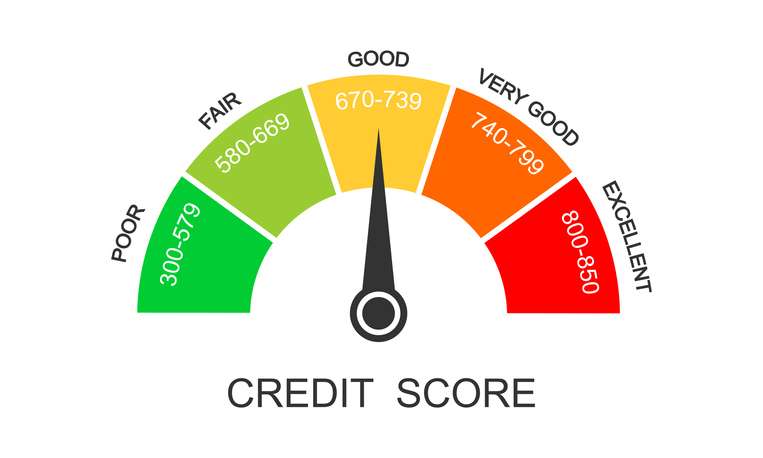
Multiple factors may contribute to determining your credit score, but it is simply represented by a number ranging from 300-850, called your FICO score1. These numbers can be broken down even further:
Credit score ratings from Poor to Excellent.
>579= Poor Credit
580-669= Fair Credit
670-739= Good Credit
740-799= Very Good Credit
800+= Exceptional Credit
So when you go to apply for any kind of credit, the first thing the lender will do is look at your credit score. They will then consider other factors like the length of your credit history, repayment history, and so on. Loans and credit cards aren’t the sole factors influencing your credit score; your credit score also plays a role in determining your insurance rates, affecting your eligibility for renting apartments, and can even be considered by some employers. Your credit score holds significance beyond just lending; it impacts various aspects of your financial life.
What Influences Your Credit Score?
We learned above what factors can influence your credit, but let’s look deeper. Why are these factors important, and how do they affect the lender’s decision to extend credit?
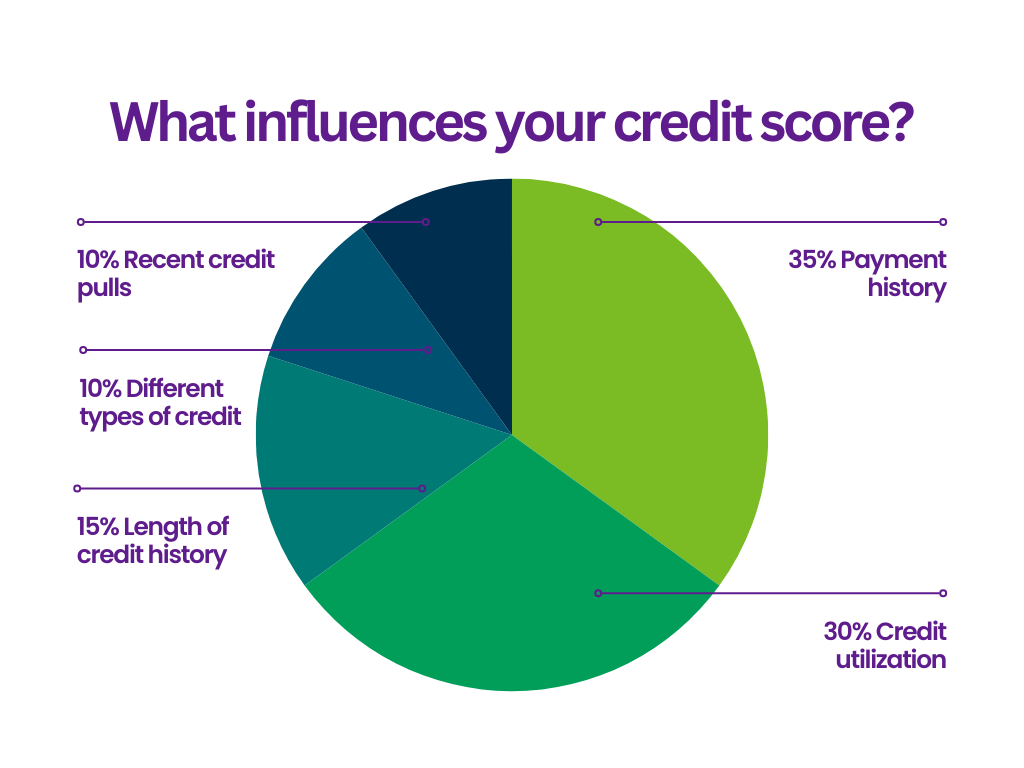
One of the most popular ways to determine your credit score is the FICO score. Here is how the FICO score is calculated2:
Payment history: 35%
Credit utilization: 30%
Length of credit history: 15%
Different types of credit: 10%
Recent credit pulls: 10%
If your credit score is low and you want to improve it, focusing on these five factors will help increase that score. Here is precisely what you need to do for each section to become the credit master and have lenders knocking on your door left and right:
Payment History
Payment history makes up the most significant chunk of your credit score. Ensure you pay all fees on time and avoid any missed payments on your report. Missing a payment for anything like a loan, credit card, or even a cellphone payment will harm your credit score, making lenders question whether they will offer you credit.
Credit Utilization
Your credit utilization shows how much of your credit you’re currently using.2 A good rule of thumb is to keep your credit utilization at 30% or lower. For example, if your credit card has a limit of $1,000, keeping your balance at $300 or lower will show lenders that you are responsible with your credit and know how to keep balances paid down. With credit utilization making up the next most significant part of your credit score, keeping those balances paid down is essential!
Length of Credit History
Regarding credit history, lenders want to see that you are responsible with your credit over a long period of time. So that’s why sometimes, even if you have a high credit score but don’t have much credit history, lenders still won’t approve you for any kind of credit. Remember to keep old accounts like credit cards and lines of credit open, as this also contributes to your credit history. If you close these accounts, credit bureaus cannot view them, making it look like there is no history for those accounts. To build up credit history, it simply takes time.
Different Types of Credit
Lenders like to see a mix of different types of credit. They want to see a combination of both revolving credit (like credit cards or lines of credit) and installment credit (personal loans, car loans, or mortgages). Lenders like to see that you are responsible for different kinds of credit and payments.
Recent Credit Pulls
Lenders look into your credit history whenever you apply for a credit card, loan, or other forms of credit. This inquiry can lower your credit score by a few points and is a red flag for lenders if too many inquiries are made at once. Lenders can view this as “risky financial behavior.”2 It’s a good rule of thumb to wait three to six months before making another credit application.
It’s also good to continually monitor your credit score and history. Millions of people in the US have mistakes on their credit reports, and getting them rectified as soon as possible is essential as those errors could negatively affect your score.2
Advantages of a Strong Credit Profile
Let’s dive into the perks of having a robust credit profile. A good credit score can lower interest rates, provide access to superior financial products, and enhance borrowing terms. A strong credit profile is a key that unlocks doors to a myriad of financial opportunities, setting the stage for a more secure and prosperous financial future. The most significant benefits to having good credit are the financial ones, but renting apartments, getting a new job, or a new cellphone contract are all things that benefit from having a solid credit profile. Here are some ways that stellar credit can improve your life and finances.
Better Approval Odds
With a sound credit history, your approval odds are much higher. This means that when you apply for things like credit cards, loans, and mortgages, lenders are more likely to approve your application based on your outstanding credit history.
Amazing Interest Rates
Want interest rates that would make Bill Gates’ jaw drop? Then make sure your credit score is impeccable! A better credit score dramatically increases your chances of having a low-interest rate, saving you tons of money throughout your credit contract.
Better Credit Terms
Having good credit will not only increase your approval odds and interest rates but also allows you to have better terms for your credit. Companies could offer a greater credit card limit or a higher loan balance if you have good credit.
Good Credit is Here to Stay
In the intricate realm of personal finance, your credit score is here as a compass, guiding you through the twists and turns of the financial world. The significance of maintaining good credit shone through as we unraveled the intricacies of credit, from its definition to the pivotal role of your credit score.
Your credit score is more than a number; it’s a silent influencer, shaping choices, unlocking opportunities, and determining the outcome of financial possibility. Mastering your credit involves understanding and actively managing factors contributing to your credit score, transforming it into a tool for prosperity. Whether seeking approval for credit or navigating non-financial realms like housing and employment, the advantages of good credit are unmatched.
As you navigate your financial journey, remember that maintaining a stellar credit score isn’t just about securing loans; it’s about harnessing the power of good credit to navigate the seas of financial opportunity with confidence and resilience. So, manage your credit wisely, and may your financial journey be filled with success, steering you toward a secure and prosperous future.
A windfall like a tax refund can be a serious boon to your investment plan. If you’re not counting on your refund to pay bills or eliminate high-interest debt, investing it is a smart way to turn that extra paycheck into even more money.
Spending your refund on a treat like a major purchase or a vacation can be a fun way to use it, too. And maybe some years, that’s just what you need. But if you’ve been trying to prioritize your long-term savings for a while and never feel like you can afford it, your tax refund is a great way to make it happen.
Investing Apps for Your Tax Refund
Investment apps make it simple to start investing when you don’t have a ton of money to spare (or to spend on a pricy advisor). Your tax refund is a great start to your nest egg, and you can use these apps to contribute a little bit each week to keep your savings growing:
Acorns: Did you know you can literally invest your spare change? Acorns rounds up purchases on your debit and credit cards and sticks the extra in an investment portfolio based on your goals. Portfolios include a balance of companies, markets, bonds and, if you want, Bitcoin, in exchange-traded funds (ETFs).
Public: Invest like a Wall Street pro with Public’s market insights and income forecasts in your dashboard. You can trade pieces of individual stocks right from your phone, or schedule recurring contributions into a personalized investment plan of your choice for stocks, ETFs and crypto.
MooMoo: Seasoned investors can grow savings on the go with Moomoo, which is designed for active trading. If you’re already familiar with terms like “options,” “fractional shares” and “cash sweep,” this app is for you.
Robinhood: The OG microinvesting app is still one of the most popular among beginners and experienced traders alike. Robinhood lets you buy pieces of stocks for as little as $1 — and it even gives you a free stock when you sign up!
Streetbeat: Chatting with Streetbeat’s AI investment advisor is just like talking with a human advisor. Tell it your goals or the types of companies you want to invest in and it’ll set you up with a personalized portfolio with timely updates and rebalancing.
SoLo Funds: Lend money to a person in need and earn a return in the form of a “tip.” Through SoLo Funds, borrowers set the terms, and you can choose which micro-loans to make based on the tip amount, the loan’s purpose and the borrower’s reputation in the app.
Fundrise: Invest in real estate without the hassle of managing property! Fundrise lets you add real estate to your portfolio by investing in real estate investment trusts (REITs), so you can diversify your investments, grow your money passively and build wealth without the headaches of being a landlord.
Tips to Invest Like a Pro
As you get started on your investment journey, follow these tips to set goals, understand your options and make a sustainable plan for your financial future.
1. Set Clear Investment Goals
Every journey needs a map, and your financial journey is no exception! Financial goals should support the personal milestones you want to hit throughout your life — and they have to be realistic. Follow these tips to set sustainable financial goals:
Define the purpose of your investments. Make sure you know what you want to achieve with your investments. Is this your main retirement plan, extra long-term savings, or for a shorter-term goal like buying a car or making a down payment on a house?
Get specific. Give your goals some details. Instead of “I want to save for a car,” set a goal like “I want to save $40,000 to buy a car 12 months from now.” Consider the SMART system for goal-setting: specific (details, like what is this money for?); measurable (set a target number so you know when you’ve reached it); achievable (it should align with your resources!); relevant (save for something you actually want); and time-bound (what’s your deadline?).
Consider your timeline. Called your “time horizon” in investor-speak, this determines what kinds of things you’ll invest in. For example, a long time horizon, like retirement 30 years from now, leaves room for ups and downs, so you can make riskier investments. For a shorter horizon, like buying a house in two years, you’d want more stable investments, like bonds or CDS.
Do some math. An investment calculator can help you figure out how much to invest each month to reach your goals. Returns aren’t guaranteed, but figuring out a conservative estimate can at least give you a plan to follow.
Embrace diversity. A diversified investment portfolio is your armor against volatility in the market. Invest in an index fund or index-tracking ETF to easily spread your investments across a variety of companies and industries. Or choose stocks and bonds industries to reduce your risk of losing big if any one industry gets rocky.
Review and adjust regularly — but don’t panic! Use an app to review your investment goals and progress about every quarter and adjust your automated investments. But don’t panic and make huge changes based on stock market headlines. If you’re unsure about your investment priorities or progress, hire a Certified Financial Planner to help adjust your plan.
2. Understand Your Investment Options
From stocks to bonds to real estate, the investment world is your oyster! Let’s explore some options for your investments:
Stocks: Also known as shares or equity, stocks are the most common type of investment. They represent ownership in a company. Through investment apps, you can purchase full stocks or a piece of a stock called a “fractional share.”
Bonds: Lend money to a borrower for a defined period with an interest rate. You can buy bonds from private companies, called corporate bonds; or governments, called Treasury bonds from the U.S. federal government.
Mutual funds: This is a pool of money gathered from multiple investors to be invested in stocks, bonds and other assets. A professional firm chooses what to invest in, and investors own shares of the whole fund. This is an easy way to diversify your investments. Index funds — mutual funds that track the performance of a stock index like S&P 500 — are some of the most stable and most recommended investments.
Exchange-traded funds (ETFs): ETFs are like mutual funds in makeup, but you can purchase your share of the fund on the market like you can a stock. You don’t have to go directly to the firm managing the fund. ETFs are popular on investment apps, because they let you have control while diversifying, without the chore of choosing individual stocks.
Real estate: You can invest in residential and commercial property without having hundreds of thousands of dollars to start. Invest through a real estate investment trust (REIT) with just a few hundred dollars to get a piece of the action!
Investment pros know about the magic of “compounding” — the ability of investments to grow faster and faster over time. That happens because the money you earn on investments gets reinvested back into the market, where it can also earn more. So you earn on your initial investment plus on the gains from that investment, without putting in more money.
Compounding is the financial world’s “snowball.”
This effect works best over the long term, when you can let your initial investment have time to grow and reinvest… and grow and reinvest… and grow and reinvest… you get you.
For the average investor, investments are meant for long-term savings, like retirement. Once you put your money in, let it hang out in your portfolio and do its thing so you can benefit from compound returns.
4. Avoid Investment Pitfalls
Investing always comes with some risk — if your shares become worth less than what you paid for them, your portfolio loses value. Ups and downs are normal throughout the life of an investment portfolio, so follow these tips for the best chance to come out ahead in the end.
Acting like a day trader. Everyday investors usually have a similar goal: building savings. So it doesn’t help you to follow the advice of people who are trying to outsmart the market and make a quick buck. Do your research so you understand the basics behind your investments — including types of securities, fees and commission rates, and when and how you get paid. But don’t get caught up trading individual stocks trying to chase the next trend — that’s a high-risk game even the pros lose most of the time.
Putting all your eggs in one basket. Don’t invest all of your money into a single company or even a single industry (like tech or crypto). That leaves you open to losing everything if disaster strikes that company or industry (think: dot-com bust). Spread out your stock picks across industries, and make sure your portfolio also includes stabler investments like bonds and real estate. An easy way to diversify is to purchase shares of mutual funds or ETFs.
Chasing past performances. Say it with us: Past performance does not guarantee future results. That’s the mantra of the investment world. Just because lightning strikes and a stock’s value spikes one year doesn’t mean it’ll happen again. Don’t gamble your investments based on past hits; put your money into tried-and-true, diversified funds.
Pulling out when the market dips. Many investors panic over headlines about the stock market plummeting for a single day or week because of current events. But this isn’t 1929. The market has reliably trended upward for decades. You have to ride out market waves to benefit from returns in the long run. Plus, selling when values are down is a surefire way to lose money now or miss out on future returns! (Caveat: If you’re planning to need the money in the next three to five years, work with a financial advisor to move your money into less risky investments to protect against market dips.)
From Refund to Riches!
Investing a tax refund is a great way to jump-start your long-term savings. Set smart goals, review your options and avoid tempting investment pitfalls, and you can set your money up to work for you for many years to come.
Kashkick is a great way to make extra cash in your spare time. With games and surveys galore, there are endless money-making opportunities! But did you know that KashKick has many offers to help youbuild your credit? If you’re looking for extra ways to build and repair your credit, look no further! We’ve rounded up some of the best credit-building offers on KashKick (and you can make some extra cash in the process, too!).
1) PerPay- Shop & Build Credit!
Does shopping make you light up like a Christmas tree? Are you always itching to get the next best thing, or looking to break up your spending into payments? Then PerPay might be the app for you!
PerPay gives you a spending limit of up to $1,000 to shop all the best brands in categories like electronics, home goods, and apparel. Your income determines your spending limit, so no credit checks are involved! After making four months of regular installment payments, PerPay will start reporting your new spending limit as a credit line to the three major credit bureaus, helping with all areas of your credit report such as payment history, credit use, length of history, credit inquiries, and credit mix. They do charge a few dollars a month for this service.
According to the PerPay website, it helps improve these areas by building “your payment history, [increasing] the length of your credit history over time, and has the potential to balance out your credit mix.”1 PerPay also claims on its website that by having them report to the credit bureaus, “you’ll have the ability to boost your credit score by an average of 39 points.”2
Register, shop, and make your first purchase. When you make your first payment installment, you’ll receive your reward from KashKick!
2) Brigit
The Brigit Credit Builder app is a nifty tool designed to help you build your credit score in a simple and stress-free way. Here’s the lowdown on what Brigit offers:
Instant Approval: no credit checks are required to start building credit with this app. No dings to your credit score means keeping as many points as possible!
Different Credit Building Opportunities: Unlike some credit-building methods that involve taking on more debt, Brigit lets you build credit by saving a little each month. You start by opening up a credit-builder account that you make savings deposits into every month. You can start with as little as $1 per month, and each payment is reported to the three major credit bureaus. You can also build credit by paying off cash advances of up to $250!5
Additional Features: Brigit offers budget management tools and identity theft protection in addition to credit building. The app provides insights into your spending and earning trends, helping you manage your finances better.
There are two options available, free or the plus plan, which is $9.99/month. Brigit claims that your score can increase by 60 points within the first six months, but keep in mind that results will vary.6
Simply subscribe with Brigit’s Plus plan to earn your KashKick reward!
With the Chime app, you can manage your money on the go! With features like a checking & savings account, a Chime Visa debit card, and the Chime Credit Builder Secured Visa Credit Card, you can have complete control of your finances through fee-free overdrafts up to $200, early paydays, safe credit-building, and so much more!
With the Chime Credit Builder Secured Visa Credit Card, there are no annual fees, no interest, and no security deposits required- and there is no credit check to apply! Chime reports your payment activity to all three major credit bureaus, helping you build your credit score in no time!7
To earn your KashKick reward, make a deposit utilizing direct deposit!
4) Varo- Credit Builder Credit Card
Varo is the first all-digital bank in the country! With no fees or minimum balances, Varo is one bank that won’t break the bank in terms of monthly fees. But you may be wondering- how does Varo help improve your credit score? The answer is simple- with the Varo Believe Card!
The Believe Card is a bit different than other credit cards. Instead of taking money out on credit, you set your spending limit! The only way you can spend money off your Believe Card is to transfer cash to it. You can spend the money on whatever you wish, whether that be coffee, gas, bills, or groceries. Every purchase you make helps build your credit score, and there is no interest or monthly fees! On average, Believe Card users saw a 42-point increase in as little as 3 months of making on-time payments. No credit? No problem! After only a month, 90% of Varo Believe Card users had a credit score.8
To earn your KashKick reward, sign up for a Varo Bank Account (with the same email as your KashKick account!), and spend at least $25 or more with your Believe Card within 30 days of your account opening.
5) Self- Credit Builder Loan
Having the same idea as the Cheese app, Self offers you a loan that you have 24 months to pay off. But again, you won’t get to access your money until the end of the loan term. Basically, you’re creating a savings account for yourself that you can’t touch. Your monthly payments are put into a Credit Builder Account and after 24 months the money is released to you, minus interest and fees. Payments start at $25/month.9
To earn your KashKick reward, your Credit Builder Account must be active and in good standing for at least 32 days.
6) Extra- Build Credit with Your Debit Card!
And here we thought that the only card you could build credit with was your credit card. With Extra, everyday purchases help build your credit. Extra tallies up all your purchases at the end of each month and reports them to the credit bureaus. In addition to building credit, you can earn up to 1% in points for everyday purchases such as ride shares, coffees, and phone bills. You can even spend your money on Air Pods or cool things in their rewards store!10
To sign up, connect your bank account to receive your spending limit (or “Spending Power”, as Extra likes to call it), which is based on your bank balance. No credit check is required! The more purchases you make, the more your Spending Power will increase.10
Simply complete your Extra application to earn your KashKick reward!
7) Kikoff- Credit Builder Line of Credit
Kikoff helps you build credit by offering you a $750 line of credit you can use to purchase things in their online store. Items start at only $10, so you won’t be breaking the bank to shop! Kikoff doesn’t check your credit, so you won’t take a hit from opening this line of credit.
Every month, you make a payment on your line of credit, and Kikoff will report this positive payment history (along with your open line of credit) to the credit bureaus, effectively helping you build your credit score! Kikoff helps with your payment history (35%), credit utilization (30%), and account age (15%). Your credit account will never expire, so keeping it open as long as possible will help increase your credit score! You can also monitor your credit score with the Kikoff app, so you can keep track of your ever-increasing credit score.11
To earn your KashKick reward, sign up for your Kikoff account, get approved, and make your first monthly payment.
8) StellarFi- Build Credit with Your Monthly Bills
StellarFi is an app known for helping people build their credit. How? By reporting on-time payments to the credit bureaus! StellarFi transforms your everyday bills like streaming subscriptions, utilities, and rent into tools for building credit. It reports your on-time payments to major credit bureaus, helping you increase your credit score just by paying your regular bills!
You can link your bank account to StellarFi and choose which bills to report. Plus, it’s got some cool features for credit monitoring, personalized tips, and educational resources to keep your credit game strong. The best part? Users have seen significant jumps in their credit scores without having to rely on credit cards, reducing the risk of debt.12 With payment history making up the most significant part of your credit report, you don’t want to ignore this app!
Earn your KashKick reward by enrolling in a new StellarFi membership plan, and even get an exclusive sign-up bonus!
9) Grow Credit- Build Credit with Monthly Subscriptions
Grow Credit helps you build credit with your monthly subscriptions. To get started, just sign up for their interest-free Grow Credit Mastercard and link all your monthly subscriptions to it. The card will automatically pay your subscriptions for you, and Grow Credit will report your on-time subscription payments to the credit bureaus. With no credit check required to apply, you’ll be building your credit in no time!13
To earn your KashKick reward, open a Grow Credit account and add your new Grow Credit Mastercard to your subscriptions!
10) CreditStrong- Credit-Building Loans & Lines of Credit
Strong credit opens doors. That is the slogan behind CreditStrong, and with good reason. CreditStrong offers a unique way to build credit and savings at the same time. Their products include Revolv, Instal, and CS Max, each targeting different aspects of credit building.
Revolv helps to instantly build revolving credit without monthly payments, potentially boosting credit scores by reducing credit utilization.
Instal, on the other hand, focuses on installment credit and savings with fixed monthly payments on a credit builder loan.
CS Max is ideal for those with cash but low credit, offering large credit builder accounts.
They won’t check your credit to open an account, and they keep their monthly payment options very reasonable.14
Create an account, pay the admin fee, and keep your account open for more than 32 days to get your reward from KashKick!
11) Dovly- boost credit score
Dovly is an AI-powered credit management platform that helps boost credit scores. It offers automated credit report monitoring and disputes incorrect items on credit reports. Dovly’s services include a free plan with manual dispute options and a premium plan with unlimited AI-driven disputes and weekly credit reports.
On average, Dovly users saw score increases of 31 points with the free plan and 79 points with the premium plan. The platform is easy to use, quick to set up, and doesn’t impact your credit score when you sign up!
To earn your KashKick reward, Join Dovly with the Premium membership and stay a member for at least one month!
Here’s the thing: making money goals that stick doesn’t have to feel so hard. The trick? Keep it real and start small. Breaking down big goals into little steps makes the whole thing way easier and a lot less stressful.
So why not try something different this year? When you set goals you can actually reach, you stay motivated–and those small wins add up fast. No more feeling like you’re starting over every January!
Let’s make 2024 the year those goals actually stick. Ready? Let’s dive in.
Why Most Beginners Fail to Meet Their Money Goals
Why do so many people fail to hit their money goals? It’s not because they don’t want to save. Often, it’s because their goals are too big or too vague. “I want to save $10,000” or “I’m going to pay off all my debt!” These goals sound great, but without smaller steps, they can feel impossible.
Here’s a surprising stat: only 20% of Americans actually have a long-term financial plan, according to a study by Northwestern Mutual. Instead, most people focus on month-to-month budgets. It works for a while but often leads to overspending when unexpected costs pop up. Sound familiar?
Another common mistake? Trying to cut back on everything all at once. It can feel like a financial crash diet—exhausting and hard to keep up.
So, what’s the trick? Think small. Set mini-goals. Little wins keep you motivated and help you stay on track. Remember, building wealth is a marathon, not a sprint.
The Importance of Setting Achievable Money Goals
We all want to save more, buy that dream house, or perhaps even an early retirement someday. But here’s the deal: going big without a plan can leave you feeling stuck fast. That’s why setting realistic goals—ones you can actually reach—makes all the difference. It keeps you motivated and moving forward.
So, what does a realistic goal look like? It’s all about breaking things down. Instead of aiming for something huge, like “I’ll save $10,000 this year,” try something like, “I’ll save $200 each month.” That feels way more doable. Every small goal you hit feels like a win, and those wins add up.
Tracking progress is easier, too. Let’s say you’re working on paying off credit card debt. Committing to $100 a month means you can actually see that balance going down, little by little. And nothing feels better than knowing it’s working. That’s what keeps you going.
And here’s a bonus: life’s unexpected surprises feel easier to handle with smaller goals. If a surprise bill shows up, having bite-sized goals makes it way easier to adjust without feeling like you’re back at square one. Maybe you save a little less that month, but you’re still on track.
Here’s a cool stat—Fidelity found that people who break down goals are 36% more likely to feel in control of their money. Smaller goals let you enjoy the journey. It’s not about the struggle–it’s about feeling good as you go.
Think of it like this: setting small, realistic goals is like planning a road trip with stops along the way. Each stop feels like a little win–before you know it, you’re closer to the big dream.
Start By Assessing Your Complete Financial Status
The first step to reaching any money goal? Knowing where you’re at. That means taking an in-depth look at your finances—income, expenses, debts, and savings. Simple, right? But here’s the catch: a survey by the National Foundation for Credit Counseling found that 60% of people don’t track their spending or budget. Without a clear view, it’s easy to lose track. Let’s break it down:
Step One: Start by jotting down all your income sources. Then, go through your monthly expenses, from essentials like rent and groceries to extras like eating out. Don’t forget your debt. Knowing what you owe—and to whom you owe it—can help you see what’s holding you back.
Step Two: Add up any savings and investments. This pulls everything together so you know exactly where you stand. You might be surprised, but having these numbers in front of you makes it so much easier to set realistic goals.
Yes, tracking it all can feel like a hassle–but the rewards are so worth it. Knowing your numbers is the first step to building a plan that actually works.
Top 7 Financial Resolutions for the New Year
It’s the perfect time to set some solid financial goals. Looking to save more, spend less, or tackle debt? Getting your finances in shape is a fantastic way to start fresh.
Here are the top 7 financial resolutions to get you rolling:
Setting Specific and Achievable Financial Goals
Setting specific and achievable financial goals is like putting a GPS on your money journey—it gives you clear directions and keeps you on track. You wouldn’t start a road trip without knowing your destination, right? The same goes for your finances. Here’s how to set graspable goals:
Step One: Start by pinpointing exactly what you want to achieve. Want to save up for a new car? Great! How much do you need? By when? Getting specific helps transform a vague dream into a tangible target.
Step Two: Make sure your goals are achievable. It’s cool to aim high, but keep it realistic. Think about what you can reasonably accomplish with your current income and expenses. This isn’t about setting limits—it’s about creating a plan you can stick to without getting burnt out or feeling discouraged.
And remember, small steps are key. Instead of aiming to stash away a huge amount right away, break it down into smaller, manageable chunks. It’s less overwhelming and way more doable.
Create and Implement a Strategic Budget
Creating and implementing a strategic budget is essential. But don’t worry—this doesn’t mean pinching pennies on everything. It’s about making smart choices that align with both your values and financial goals. Here’s how:
Step One: Know where your money is going. Track your spending for a month. You might be surprised at what you find. Those little coffee runs can really add up!
Step Two: Categorize your expenses. Split them into ‘needs’ like rent and groceries, and ‘wants’ like dining out and other luxuries. This is where you can start making cuts if needed–but remember, it’s about balance. Cutting out all the fun can make a budget hard to stick to.
Step Three: Set limits for each category. Stick to these limits to keep your spending in check. This is how you take control.
Revisit your budget every now and then. As life changes, your budget should evolve, too. Keep tweaking it to find what works best for you.
Pay Off Debt
Paying off debt might not sound like the most fun thing to do, but think of it as cleaning up after a big party—it’s necessary to start fresh. Getting rid of debt frees you up to save more and live better. Here’s how you can tackle it:
Step One: List out all your debts. Include everything from credit card balances to student loans. Knowing exactly what you owe is the first big step.
Step Two: Prioritize your debts. Some folks like to knock out the smaller debts first for quick wins—it’s super motivating! Others might choose to tackle the ones with higher interest rates to save money in the long run.
Step Three: Focus on budgeting extra money each month to put towards these debts. Even a little extra can make a big difference. During the early part of 2021, 24% of consumers were actively using their discretionary income to reduce their debt.
Build a Robust Emergency Fund
Building a robust emergency fund is more than just a good move—it’s your financial safety net for those “just in case” moments. Car breaks down? Unexpected medical bill? Job situation changes overnight? That’s when your emergency fund comes into play, turning a potential financial nightmare into a manageable hiccup.
Wondering how much to save? Aim for three to six months’ worth of expenses. It sounds like a big chunk, but you don’t have to do it all at once. Start small, maybe with just a bit from each paycheck. Before you know it, it starts to pile up.
A higher score means you could get better interest rates on loans and credit cards, saving you some serious cash. So, how do you pump those numbers up?
Step One: First things first, keep an eye on your credit reports. Mistakes can sneak in and pull your score down. You can snag a free report every year from each major credit bureau at AnnualCreditReport.com.
Step Two: Always, always pay your bills on time. Even one late payment can ding your score. Pro tip: set up automatic payments so you never miss a beat.
Step Three: Keep your credit card balances low. Using too much of your available credit can look like you’re stretching yourself thin. The sweet spot? Try to use less than 30% of your limit.
Automating your financial management puts your money matters on autopilot. It streamlines your life and ensures all your financial tasks get handled on time, every time. Imagine this: no more late fees or missed payments, just smooth sailing.
Step One: Start by setting up automatic payments for your usual bills—rent, utilities, credit cards. This way, you don’t have to stress over due dates again. It’s a total game-changer!
Step Two: Automate your savings. Pick an amount to tuck away each month and set it to transfer to your savings account automatically. Watching your savings grow without any extra effort feels amazing, right?
Setting up these automations not only keeps your financial health on track but also frees up your time to focus on other fun stuff. Set it, forget it, and let the system do the work. Less hassle, more saving—what’s not to love?
Start Planning Now for Retirement
Starting now is a smart move. The sooner you start, the more time your money has to grow—thanks to compound interest, that’s like money magic. Every buck you save today is paving the way to a chill retirement.
Why not look into retirement accounts like 401(k)s and IRAs? These can be game-changers when you’re ready to kick back. Try to chuck in a bit of cash regularly–even if it’s just a little.
It’s never too early or too late to get started!
Final Words: Stay Committed to Financial Improvement
Staying on track with your money goals isn’t always easy, but it’s so worth it. It’s all about those small wins—saving a little here, sticking to your budget there. You might not see huge changes overnight, but every step you take is one step closer to where you want to be.
And hey, don’t beat yourself up if you slip up from time to time. It happens to everyone! What matters is that you keep going. Celebrate the little victories, because they add up in the long run.
Just remember: progress is progress, no matter how slow. You’ve got this!
If you’re looking to boost your earnings while you’re at it, why not check out KashKick and learn new ways to earn?
Many have already discovered the benefits of the shared economy, using it to supplement their income, pursue their passions, and reclaim their financial freedom.
And the best part? This is just the beginning.
It is also projected to be valued at $794 billion by 2031.
Eventually, what started as a grassroots movement has blossomed into a full-fledged economic force.
The ripple effect of the shared economy touches nearly every industry, from transportation to housing.
But how did this come about?
This article will go beyond the surface to explore how the shared economy works, how it grew and where it’s headed next.
What is the Shared Economy?
The shared economy, also called the collaborative or gig economy, is a decentralized model where individuals share or exchange goods, services, and resources through digital platforms.
The idea is simple: rather than buying something you’ll use infrequently, you can either rent or borrow it from someone who already owns it.
Unlike traditional business models, where companies own assets and deliver services, the shared economy allows people to rent out what they already own, such as cars, homes, or skills, creating a more efficient use of resources.
Likewise, it enables individuals and communities to share or access goods, services, and resources, often facilitated through digital platforms and peer-to-peer interactions.
The key characteristics of the shared economy include:
Access over ownership: Rather than owning assets outright, consumers can access goods and services on an as-needed basis, often through rental or subscription models.
Peer-to-peer transactions: The shared economy leverages technology to enable direct exchanges between individuals, cutting out traditional middlemen.
Efficient utilization of resources: The shared economy aims to maximize the utilization of underused assets, creating value from previously idle resources.
Community-driven platforms: Shared economy businesses often build their models around online communities and user-generated content, fostering a sense of connection and trust.
Technology-driven platforms: Companies like Uber, Airbnb, and TaskRabbit serve as intermediaries, matching users with providers.
Trust and reputation systems: The success of the shared economy relies heavily on trust. To build confidence, platforms incorporate ratings, reviews, and verification processes.
Flexibility: Users can access goods or services on demand without the long-term commitment of ownership.
Origin and Evolution of the Shared Economy
The shared economy, while often viewed as a modern innovation, is rooted in age-old practices of collaboration and resource-sharing.
Historically, communities depended on barter systems and the informal exchange of goods and services.
These systems allowed people to share what they had, whether it was food, tools, or labor, in return for what they needed. This form of sharing thrived in smaller, more tightly-knit communities where relationships were built on trust and reciprocity.
For example, farmers might share machinery during harvest seasons, or neighbors might exchange skills like carpentry for food.
As the world shifted towards industrialization, communal sharing systems became less common, replaced by formal businesses and institutions that owned and sold goods and services.
The idea of individual ownership and the traditional market economy took hold, and sharing became more of a personal or familial activity rather than a community-wide practice.
The Digital Revolution and the Inception of Modern Sharing Platforms
The concept of the shared economy as we know it today was fundamentally transformed with the rise of the digital age. The development of the internet and mobile technology reformed how people could connect and exchange goods and services globally.
The birth of e-commerce platforms in the 1990s, such as eBay, showed early signs of a growing interest in peer-to-peer (P2P) exchange, as people started selling second-hand goods online.
However, the real turning point came after the 2008 global financial crisis, when economic challenges spurred a renewed interest in cost-saving measures and alternative forms of income.
During this period, people struggled to maintain their standard of living and began seeking more flexible ways to supplement their income.
Simultaneously, consumers were growing more skeptical of large institutions, which had played a central role in the economic downturn. This led to a cultural shift toward valuing access over ownership—why own a car when you can simply rent one when needed?
In 2008, Airbnb was launched as a platform that allows people to rent out spare rooms or their homes to travelers, offering a more affordable alternative to hotels.
At the time, the idea of staying in a stranger’s home seemed unconventional, but it quickly gained traction, particularly during the recession when both homeowners and travelers were looking for cheaper alternatives.
Uber, founded in 2009, introduced a similar model, allowing people to use their own cars to provide rides for others.
Instead of owning a fleet of vehicles, Uber transformed everyday individuals into drivers for hire. These platforms were the first in a series of digital companies that would turn ordinary people into part-time entrepreneurs.
The rise of smartphones and GPS technology further accelerated the growth of the shared economy. Mobile apps enabled instantaneous connections between consumers and service providers, allowing for seamless, on-demand transactions.
For example, riders could hail a car in minutes with Uber, while travelers could book a last-minute stay with Airbnb. The level of convenience and immediacy was unprecedented, and it played a huge role in the widespread adoption of shared economy platforms.
By 2015, the shared economy had taken off, particularly in sectors like transportation, accommodation, and gig work.
Freelance platforms like Fiverr and Upwork allowed people to monetize their skills at their own pace, while services like TaskRabbit provided a marketplace for everyday tasks like furniture assembly or running errands.
Impact of the COVID-19 Pandemic on the Shared Economy
While the shared economy had been growing steadily, the COVID-19 pandemic had a profound impact—both positive and negative—on its evolution.
Certain sectors, like travel and accommodation, were hit hard as global lockdowns and restrictions grounded flights and closed borders. Airbnb, for instance, saw its bookings plummet in 2020 as tourism came to a halt.
However, platforms related to gig work, food delivery, and remote freelancing experienced unprecedented demand during the pandemic.
As people stayed home, services like DoorDash, Instacart, and Postmates became essential for delivering groceries and meals.
In fact, the demand for food delivery services grew by over 96% during the pandemic. Similarly, gig platforms like Fiverr and Upwork experienced a surge in demand as companies shifted to remote work and sought freelance talent to fill gaps in their operations.
One of the most important factors that enabled the shared economy to flourish was the development of trust mechanisms on digital platforms. When you’re getting into a stranger’s car or staying in someone’s home, trust is important.
Platforms like Uber and Airbnb introduced ratings and review systems to foster trust between users.
After every ride or stay, users are asked to rate their experience, leaving both positive and negative feedback that others can view. Transparency like this helped build a sense of accountability and security, making the shared economy more reliable to a wider audience.
Regulatory Evolution and Legal Challenges
As the shared economy evolved from an informal, community-driven idea into a tech-fueled global phenomenon, it became clear that regulations designed for traditional businesses didn’t always apply.
Early platforms like Uber and Airbnb operated in a legal gray area, often bypassing existing regulations for taxis, hotels, and employment. This allowed them to scale quickly, but it also attracted scrutiny from governments and competitors in traditional industries.
Initially, regulators struggled to keep up. By 2010, major cities like New York, San Francisco, and London began clashing with shared economy platforms over issues like zoning laws, safety standards, and worker rights.
For example, Uber faced backlash from taxi unions that argued the platform’s drivers were operating illegally, without licenses required for professional drivers.
Likewise, Airbnb hosts were often in violation of local housing or zoning laws, leading to lawsuits and regulatory crackdowns in popular tourist cities.
However, this regulatory pushback also marked an important evolutionary stage for the shared economy.
Over time, governments worldwide began to adopt laws and introduce frameworks that allowed platforms to operate more transparently.
In some cases, platforms themselves introduced self-regulation mechanisms to improve safety and compliance, such as background checks for Uber drivers or insurance coverage for Airbnb hosts.
Significant milestones in this regulatory evolution include:
In 2017, the European Court of Justice ruled that Uber operates as a transport service and must comply with local taxi regulations.
In 2019, California’s Assembly Bill 5 (AB-5) sought to classify gig workers like Uber drivers as employees, not independent contractors, to ensure they received labor protections such as minimum wage and benefits.
In 2019, Airbnb agreed to share data on its listings with New York City to help enforce local rental laws following legal disputes.
In 2023, New York passed a law (Local Law 18) restricting short-term rentals in certain areas to limit Airbnb’s impact on housing shortages.
Regulatory adaptations signal a maturation of the shared economy. What started as a disruptive and largely unregulated movement has evolved into a more structured industry that balances innovation with legal oversight.
Conclusion
As the shared economy continues to grow, we’re likely to see even more innovation as new platforms and technologies emerge, making sharing even easier and more impactful.
The shared economy offers a future where resources are maximized, industries are disrupted, and individuals have more control over their time and income.
What are we getting from this shift? A world where collaboration, flexibility, and sustainability are the cornerstones of everyday life.
Have you ever wondered why people fall for financial scams, even when the warning signs seem so clear? It’s not just about being tricked — it’s about how scammers expertly tap into human emotions.
In 2024 alone, the Federal Trade Commission reported losses of $12.5 billion due to fraud, a staggering 25% increase from the year before.
Scammers scramble your brain by creating false urgency, using trust-building tricks and playing on your desires. Getting caught up in a scheme is easier than you might think — but learning to spot scammers’ tactics can help keep your financial information safe.
Let’s talk about how to protect yourself from financial scams. In this post, we’ll cover:
Common Psychological Manipulation Techniques in Financial Scams
Red Flags to Help You Spot a Scam
How to Protect Yourself from Falling for a Scam
Financial Fraud and Scamming Psychology
Financial fraud uses deceptive practices to steal money from individuals or organizations. Scammers often manipulate their schemes to make them more convincing, targeting people through phishing emails, investment scams or fake lotteries. But what makes these fraudsters so effective?
Psychology plays a huge role in a scam. Scammers exploit emotional triggers like fear, greed and trust to manipulate their victims. For instance, they might create a sense of urgency to pressure you into making a hasty decision. Or they might use social proof to gain your trust, presenting fake reviews or testimonials.
Why does this matter? Recognizing these psychological tricks can help you avoid falling victim to them. Scammers understand human behavior, so the better you understand their tactics, the better you can protect yourself.
Knowing how scammers manipulate your emotions gives you an edge. It helps you more easily spot someone using these tactics, so you can avoid the kind of emotional response that can put your finances at risk.
Common Psychological Manipulation Techniques in Financial Scams
Scammers use well-established psychological principles to deceive their victims. These techniques are subtle yet powerful, and understanding them is key to staying safe. Let’s break down some of the most common psychological principles scammers tap into.
Social Proof and Herd Mentality
Social proof describes humans’ tendencies to follow the actions of others. We often assume if a lot of people are doing something, it must be the right thing to do. Scammers take advantage of this assumption by manufacturing fake social proof to convince you their scheme is legitimate.
Scam websites might include fake testimonials or reviews or display inflated outcomes to convince you it’s safe (and smart) to engage with them.
In investment scams, fraudsters often showcase fake success stories of individuals who supposedly made huge profits. A famous case is the Bernie Madoff Ponzi scheme, which lured in more than 4,800 clients and totaled around $65 billion in losses.
Authority and Trust Exploitation
People are inclined to trust authority figures, whether they’re experts, public officials or companies. So scammers often impersonate authority figures to lend credibility to their claims. They might pose as IRS agents or tell you they represent your bank or credit card company, for example.
Impersonation scams cost Americans $1.3 billion in 2023 alone, according to the FBI. Scammers will tell you they’re with a trustworthy entity to convince you to share personal or financial information or even make payments directly to their accounts.
Scarcity and Urgency Pressure
Scarcity and urgency are classic sales tactics, and scammers use them in a similar way. While sales reps highlight real urgency or scarcity to urge people into buying without too much consideration, scammers often create false urgency to pressure people into acting before they realize something’s fishy.
If someone tells you something is only available for “a limited time “ or that “immediate action” is required, take time to confirm the claim. If you’re told something is in “limited supply” or “going fast,” ask yourself whether it’s something you wanted to purchase in the first place.
When you act fast because you don’t think you have time to reconsider, you can fall into traps you might otherwise avoid.
Reciprocity and the Principle of Obligation
Humans have a strong sense of obligation toward people or institutions that have done something for them. Reciprocity is basically the practice of returning a favor or providing mutual aid.
Scammers use this tendency to their advantage by offering you something of value upfront — a free service or a gift. This is meant to make you feel obliged to cooperate with their next ask. This is also a common sales tactic, but scammers will use it without offering anything of real value in return.
For example, a scammer might offer free investment advice and later ask for a fee to “secure” an investment for you that never actually materializes.
Emotional Appeals
Scammers are great at exploiting the human emotions that move people to action, like fear, greed and sympathy.
Fear is often baked into other manipulative tactics they use. For example, a scammer impersonating an IRS agent and telling you to act immediately to avoid legal action is counting on you acting out of fear of consequences so you don’t think carefully about who they are or what they’re asking.
This kind of IRS phone scam targets thousands of Americans every year. Scammers scare people into making payments over the phone.
Scammers exploit greed through false promises of easy money. They might convince you to buy into fake lotteries or get-rich-quick investment schemes, for example, by exploiting your need for money.
Scammers manipulate your sympathy for human suffering by collecting donations for fake causes or charities. The FBI reports that charity fraud spikes after natural disasters, using the visibility of the event and people’s sympathy for disaster victims to raise millions of dollars that never reach those in need.
Red Flags to Help You Spot a Scam
If you know what to look for, scammers often reveal themselves through a consistent pattern of behavior.
5 Steps of a Financial Scam
Most financial scams have a similar anatomy, following a process designed to manipulate and confuse you. Familiarize yourself with this common pattern so you can sniff out a scam and avoid being taken for a ride.
Hook: Scammers lure you in with an enticing offer, like free money, an easy loan or a too-good-to-be-true investment; or an urgent matter, like an unpaid tax debt.
Setup: They establish trust and credibility by impersonating legitimate authorities or presenting fake social proof.
Pressure: They create a sense of urgency through false scarcity, demands for immediate action or threats of dire consequences.
Reward: They promise an unrealistic reward or solution to your problem to keep you engaged.
Closure: Once you comply and they seal the deal, the scammer will take the money and run, leaving no way to follow up or find them to get your money back.
Tactics That Should Send You Running the Other Way
These common traits should tip you off that something might be a scam — and you should think twice before handing over your personal information or credit card.
Scarcity or urgency: Legitimate authorities or companies won’t force you to make a quick decision or act without time to think.
Too good (or bad) to be true: Most people know to be suspicious of any offer or opportunity that comes out of nowhere and promises easy money. But you should be equally suspicious of a threat that seems to come out of nowhere — legitimate authorities don’t threaten legal action or jail time over the phone!
Flattery and charm: It’s a common sales tactic to flatter you to inspire trust and reciprocity. Sure, sometimes people are just being nice. But tune into when you’re feeling the urge to comply with someone just because they seem charming.
Inconsistent information: If details aren’t adding up, or they’re changing over time, or you’re not getting direct answers to your questions, don’t move forward. Don’t feel ashamed of being confused; take that as a sign that something might be up.
Asking for sensitive information: If you’re asked for identifying information like a Social Security number or passwords, or for bank account or credit card details — especially over the phone — stop the conversation. Ask for another way to confirm your identity; legitimate companies usually give you other options.
Taking untraceable payment methods: Legitimate authorities and companies don’t take over-the-phone payment of gift cards or wire transfers, but scammers love them because they don’t offer you any recourse to get your money back.
Knowing what to look for can help you spot a scam before it’s too late, keeping your finances and personal information safe.
How to Fortify Yourself Against Psychological Manipulation in Scams
Scammers know how to tap into human emotions and behaviors, but you can protect yourself with a few simple strategies.
Strengthen Your Critical Thinking Skills
One of the most effective ways to protect yourself from scams is by sharpening your critical thinking skills. Being ready to spot red flags and ask questions will keep you from making the rash decisions that benefit a scammer.
Scammers rely on their victims making decisions based on emotion or impulse, so take time to pause and evaluate any offer or request — even if you believe it’s from a legitimate source.
Ask yourself: “Does this sound too good to be true?” and “What evidence do I have that this is legitimate?”
Recognize Your Cognitive Biases
Cognitive biases are mental shortcuts our brains use to make quick decisions. Scammers exploit these biases to manipulate us.
For example, confirmation bias leads people to seek out information that supports their beliefs, even if it’s false. A scammer might tell you, “You’ve been specially selected for this opportunity,” which could confirm your belief (or desire to believe) that you’re worthy of special recognition.
Another common bias scammers benefit from is optimism bias, which is a belief that you’re less likely to fall for a scam than other people. If you don’t think you’re at risk, you might let your guard down and be more easily tricked.
Don’t Make Emotional Decisions
Scammers often rely on emotional manipulation — whether it’s fear, greed or sympathy — to cloud your judgment. If you feel emotionally charged about a financial decision, step back and detach your emotions from the situation.
One technique is the so-called 10-second rule, where you pause and count to 10 before making any financial commitment. This is a simple way to buy yourself time to assess potential red flags and consider any questions you need answered before making a financial commitment.
Another way to avoid emotional decisions is to always seek a second opinion. If you’re faced with an opportunity or threat that’s making you feel afraid, excited or sympathetic, ask a trusted friend or family member for their take. They can offer a detached perspective, even if you’re not able to turn off your own emotions about the situation. Seeking a second opinion also gives you extra time to think before you act.
Verifying Facts and Sources
One of the simplest ways to defend against a scam is to verify the source of information you receive. Scammers often pose as trusted authorities, but their credentials are usually fake.
You can double-check a person’s affiliation with any entity they claim to represent simply by contacting that entity directly.
For example, if someone claims to be calling from your bank, let them know you’ll call right back. Hang up, and call the phone number listed on your bank’s website to confirm the information you were given. You can do the same for any financial or government institution a scammer might pretend to represent.
You can similarly verify any private organization a scammer claims to work with or an offer they make. Let them know you’ll call them back (resist any claims of urgency!), and take a moment to search online for their company or product. Confirm the legitimacy of a company not only through its website, but also through real employees on LinkedIn and reviews on trusted sites like TrustPilot and the Better Business Bureau.
Scammers are increasingly sophisticated, but you can protect yourself against their tricks by taking time to double-check information.
What to Do If You’ve Been Targeted by a Financial Scam
If you’ve been targeted by a financial scam, don’t panic — take action. First, lock things down:
Next, report the scam to the FTC and your local police — they’ve seen it all, and they’re there to help you find whatever remedies are available.
Finally, don’t forget about your emotional well-being. Talk it out with a trusted friend or family member. Dealing with the fallout of a financial scam can be tough, but you’re not alone.
Hey there, savvy saver! If you’re staring down a mountain of debt and feeling a bit overwhelmed, fear not! We’re about to turn that daunting climb into a thrilling adventure. Getting out of debt doesn’t have to be a bore—with the right mindset and clever strategies, it can actually be fun! Ready to transform your financial life? Let’s dive in!
1. Turn Debt Repayment into a Game
Who doesn’t love a good game? Create a debt repayment game with levels, rewards, and maybe even a leaderboard if you have friends on a similar journey! Here’s how:
– Set Milestones: Break your debt into manageable chunks. Each chunk you pay off is a level completed!
– Rewards: Treat yourself when you reach a milestone. It could be a small treat like a fancy coffee or a new book!
– Leaderboard: If you’re competitive, track your progress against friends or family who are also paying off debt! This will help keep you accountable while keeping things exciting and offering a competitive twist.
2. Automate Your Savings with a Twist
The more money you save, the more debt you’ll be able to pay off! Wait until you get a good amount of money in your savings account, then put a chunk of it towards your debt. Saving money can feel like a chore, but automating it makes it painless. Add a twist to keep it exciting!
– Savings Challenges: Set up automatic transfers to your savings account that increase over time or vary randomly. It’s like a surprise party for your bank account!
– Round-Up Apps: Use apps that round up your purchases to the nearest dollar and save the difference. It’s a fun way to watch your savings grow without even noticing!
Check out this article for KashKick’s top 5 apps to kickstart your savings!
3. Create a Vision Board
Visualizing your goals can make them feel more attainable. Plus, crafting a vision board is a blast!
– Pictures and Quotes: Fill your board with images and quotes that inspire you to stay on track. Include your savings goals, debt repayment goals, and anything you want to purchase once you pay that debt off!
– Progress Tracker: Include a section to track your debt repayment progress. Watching your debt shrink can be incredibly motivating!
4. Side Hustles with a Passion
Earning extra cash doesn’t have to be boring. Find a side hustle that excites you:
– Turn Hobbies into Income: Love photography? Sell your photos online. Enjoy crafting? Open an Etsy shop. Passion projects can bring in extra money and joy!
– Gig Economy: Try fun gigs like dog walking, mystery shopping, or getting paid to taste-test food.
KashKick can help with some other easy side hustles you can start today. Our website has some apps that can help you jump-start your side hustle! Make sure to read these articles for all the info:
Every step forward is a reason to celebrate. Keep the excitement alive by acknowledging your progress:
– Mini Celebrations: Host a mini party for yourself when you pay off a small debt or reach a savings goal. You can even treat yourself to dinner or a little shopping spree!
– Share Your Success: Post about your progress on social media or share with family and friends you’re close with. Positive reinforcement is powerful!
6. Get Creative with Budgeting
Budgeting can feel restrictive, but with a creative approach, it’s empowering:
– Envelope System: Use colorful envelopes for different spending categories. It’s a tactile way to manage money.
– Bullet Journals: Design a budgeting bullet journal with doodles, charts, and graphs. It’s a visual and creative way to track your finances.
If you want to make budgeting even more fun, check out all our tips in this article.
7. Challenge Yourself
Turn saving money and paying off debt into a series of fun challenges:
– No-Spend Challenges: Challenge yourself to not spend money on non-essentials for a week or a month.
– Couponing Adventures: Make a game out of finding the best deals and discounts. Who can save the most?
8. Stay Positive and Persistent
Above all, keep a positive attitude. Every dollar paid off is a step closer to freedom:
– Daily Affirmations: Start your day with positive affirmations about your financial goals. Positive self-talk will keep you motivated and excited about your progress.
– Reflect on Progress: Regularly reflect on how far you’ve come and the financial freedom that lies ahead!
Remember, getting out of debt is a marathon, not a sprint. With these tips, you can make the journey not only bearable but downright enjoyable. Happy saving, savvy saver! You’ll be debt-free before you know it!
Managing your money doesn’t have to be a daunting task! With a sprinkle of knowledge and a dash of enthusiasm, you can transform your financial life. Here are ten essential financial skills everyone should master to take control of their financial future.
1. Budgeting: Your Financial GPS
Budgeting is like having a GPS for your finances. It helps you navigate your income and expenses, ensuring you don’t get lost in a sea of debt. Start with the basics: list your income, track your expenses, and see where your money goes. Once you have a clear map, adjust your spending to reach your financial destination!
2. Saving: The Art of Paying Yourself First
Imagine if you set aside a portion just for yourself every time you got paid. That’s the essence of saving! Make a goal to save at least 20% of your income. Create an emergency fund, save for big purchases, and watch your savings grow over time. Remember, every little bit adds up!
KashKick’s even covered you with a few savings articles, too. Check them out below:
3. Investing: Planting Money Trees
Investing is like planting money trees that bear fruit over time. Whether it’s stocks, bonds, or real estate, investing can help your money grow. Start by understanding the basics and gradually building your portfolio. The earlier you start, the better your harvest will be!
For even more tips on investing, take a look at these articles:
4. Credit Management: The Power of a Good Score
Your credit score is your financial report card. A good score opens doors to better interest rates and financial opportunities. Pay your bills on time, keep your credit card balances low, and avoid unnecessary debt. Your future self will thank you!
For some important advice on credit, dive into these articles:
5. Debt Management: Taming the Debt Dragon
Debt can feel like a fire-breathing dragon, but with the right strategy, you can tame it. Focus on paying off high-interest debt first, consolidate if possible, and avoid accumulating new debt. Dedicate a certain percentage of your paycheque to paying off debt, as you would for savings—you won’t regret it! Create a plan and stick to it!
6. Retirement Planning: Your Future Self’s Best Friend
Retirement might seem like a distant dream, but planning for it now ensures a comfortable future. Explore options like 401(k)s and IRAs, and start contributing early. You can do the same as you’re doing for savings and paying off debt—dedicate a certain percentage of your paycheck to your retirement fund. Think of it as a gift to your future self—a gift of financial freedom!
7. Tax Savvy: Keeping More of Your Hard-Earned Money
Understanding taxes can save you a significant amount of money. Learn about deductions, credits, and tax-efficient investments. Whether you do your taxes yourself or hire a professional, being tax-savvy ensures you keep more of your hard-earned money.
8. Insurance: Your Financial Safety Net
Insurance is your financial safety net, protecting you from unexpected expenses. From health and life insurance to property and auto insurance, ensure you’re adequately covered. You could find yourself in a financial bind without it—it’s better to have it and not need it than need it and not have it!
9. Financial Goal Setting: Dream Big, Plan Bigger
Setting financial goals gives you something to strive for. Whether it’s buying a house, traveling the world, or starting a business, having clear goals helps you stay focused. Break down your goals into manageable steps and celebrate your progress along the way!
10. Continuous Learning: The Ever-Evolving Money Game
The financial world is constantly changing, and staying informed is key. Read books, take courses, and follow financial news. The more you learn, the better equipped you’ll be to make smart financial decisions. Knowledge truly is power!
By mastering these ten essential financial skills, you’re well on your way to achieving financial freedom. Remember, the journey to financial success is a marathon, not a sprint. Stay committed, keep learning, and enjoy the rewards of your hard work. Your financial future is bright, and it all starts with these fundamental skills. Happy mastering!
As we hit the halfway mark of the year, it’s an ideal time for a mid-year financial checkup. This process involves evaluating your financial health, tracking your progress, and making necessary adjustments to stay on course. Let’s delve into the key areas you should focus on: reviewing and updating your budget, tracking and analyzing spending habits, checking your savings progress, assessing your investment goals, reviewing your debt repayment progress, and checking your credit report. This comprehensive guide will help you navigate each step and ensure you are on the right track to achieving your financial goals.
Review and Update Your Budget
Why Budget Review is Crucial
A budget isn’t a set-it-and-forget-it tool; it’s a dynamic plan that should evolve with your circumstances. Reviewing your budget mid-year helps you identify any deviations and make adjustments accordingly. This practice not only keeps you aligned with your financial goals but also provides an opportunity to reflect on your spending habits and make necessary changes.
Steps to Review and Update Your Budget
Compare Planned vs. Actual Spending: Look at your budgeted amounts versus what you have actually spent. This comparison will highlight areas where you may be overspending or underspending. Identifying these areas early is crucial to prevent any financial strain later in the year.
Adjust for Life Changes: Have there been any significant changes in your income or expenses? Life is unpredictable, and changes such as a new job, a pay raise, or unexpected expenses can impact your budget. Adjust your budget to reflect these changes, ensuring that it remains realistic and achievable.
Reallocate Funds: If you’ve spent less in one category, consider reallocating those funds to another category, such as savings or debt repayment. This reallocation can help you make the most of your available resources and ensure that you are prioritizing your financial goals effectively.
Review Subscription Services: Over time, it’s easy to accumulate various subscription services that you might not be using. Take a detailed look at all your subscriptions and cancel those that are not essential or no longer add value to your life.
Set New Budget Goals: Based on your mid-year review, set new budget goals for the remaining months of the year. These goals should be specific, measurable, achievable, relevant, and time-bound (SMART). Having clear goals will keep you motivated and focused on your financial objectives.
Tracking your spending habits provides insight into where your money is going and helps you identify areas for improvement. By understanding your spending patterns, you can make informed decisions that align with your financial goals.
Tools and Techniques
Use Budgeting Apps: Apps like Mint, YNAB (You Need a Budget), and PocketGuard can help you track spending and categorize expenses. These apps provide a visual representation of your spending habits, making it easier to identify areas where you can cut back.
Review Bank Statements: Go through your bank and credit card statements to identify patterns and spot unnecessary expenditures. Regularly reviewing your statements can help you catch any fraudulent charges early and keep your spending in check.
Set Spending Limits: Based on your analysis, set spending limits for discretionary categories to avoid overspending. This practice can prevent impulse purchases and ensure that you are living within your means.
Track Cash Flow: In addition to tracking expenses, it’s important to monitor your cash flow. Ensure that your income consistently exceeds your expenses. Positive cash flow is crucial for building savings and reducing debt.
Create a Spending Diary: For a more detailed analysis, consider maintaining a spending diary for a month. Write down every purchase you make, no matter how small. This practice can reveal spending habits that you might not have been aware of and provide insights into where you can make adjustments.
Check Savings Progress
Importance of Regular Savings Check-Ins
Regularly checking your savings progress ensures that you’re on track to meet your financial goals, whether it’s for an emergency fund, a vacation, or retirement. Consistent saving is key to financial security and achieving long-term objectives.
How to Assess Savings Progress
Evaluate Your Savings Rate: Calculate the percentage of your income that you’re saving. Aim for at least 20% of your income if possible. If you find that you are saving less, look for ways to cut back on expenses and increase your savings rate.
Compare with Goals: Compare your current savings with your mid-year goals. Are you on track, ahead, or behind? Use this comparison to adjust your savings strategy and ensure that you meet your targets by the end of the year.
Automate Savings: Consider setting up automatic transfers to your savings account to ensure consistent contributions. Automating your savings can help you prioritize saving over spending and eliminate the temptation to spend extra cash.
Emergency Fund Check: Ensure that your emergency fund is adequately funded. Aim for at least three to six months’ worth of living expenses. Having a well-funded emergency fund can provide peace of mind and financial stability in case of unexpected events.
Reevaluate Short-Term and Long-Term Goals: Regularly reevaluate both your short-term and long-term savings goals. Adjust them as necessary to reflect any changes in your financial situation or priorities.
Assess Investment Goals
Aligning Investments with Goals
Your investment strategy should align with your long-term financial goals, such as buying a home, funding education, or retirement. Regularly assessing your investments ensures that they remain on track to meet these goals.
Steps to Assess Investment Progress
Review Portfolio Performance: Analyze the performance of your investments over the past six months. Are they meeting your expectations? Compare the performance with relevant benchmarks and make adjustments if necessary.
Rebalance Your Portfolio: Ensure your investment mix is still in line with your risk tolerance and goals. Rebalancing your portfolio can help you maintain your desired asset allocation and manage risk effectively.
Consult a Financial Advisor: If you’re unsure about your investment strategy, consider seeking advice from a financial advisor. A professional can provide personalized recommendations and help you navigate complex investment decisions.
Assess Risk Tolerance: As your life circumstances change, your risk tolerance may also change. Reassess your risk tolerance and adjust your investment strategy accordingly. Ensure that your portfolio reflects your current financial situation and goals.
Review Fees and Expenses: Investment fees and expenses can significantly impact your returns. Review the fees associated with your investments and look for lower-cost alternatives if possible. Minimizing fees can help you maximize your investment returns.
Review Debt Repayment Progress
Staying on Top of Debt
Regularly reviewing your debt repayment progress helps you stay on track and make adjustments to pay off debt faster. Reducing and eliminating debt is crucial for achieving financial freedom and improving your overall financial health.
How to Monitor Debt Repayment
List All Debts: Create a list of all your debts, including balances, interest rates, and minimum payments. This comprehensive overview will help you prioritize which debts to tackle first.
Track Payments: Keep track of all payments made over the past six months. Have you been able to make more than the minimum payments? Making extra payments can accelerate debt repayment and save you money on interest.
Explore Repayment Strategies: Consider different repayment strategies like the snowball or avalanche methods to accelerate debt repayment. The snowball method involves paying off the smallest debt first, while the avalanche method focuses on paying off the debt with the highest interest rate first. Choose the strategy that best fits your financial situation and motivation.
Consolidate Debt: If you have multiple high-interest debts, consider consolidating them into a single loan with a lower interest rate. Debt consolidation can simplify your repayment process and reduce the amount of interest you pay.
Negotiate with Creditors: If you’re struggling to make payments, consider negotiating with your creditors for lower interest rates or more manageable repayment terms. Many creditors are willing to work with you to avoid defaults.
Check Your Credit Report and Fix Any Problems You See
Importance of Regular Credit Report Checks
Your credit report is a crucial aspect of your financial health. It affects your ability to secure loans, get favorable interest rates, and even rent apartments or get certain jobs. Regularly checking your credit report helps you stay on top of your credit status, identify errors, and take steps to improve your credit score.
Steps to Check Your Credit Report
Obtain Your Credit Report: You’re entitled to a free credit report from each of the three major credit bureaus (Equifax, Experian, and TransUnion) once a year. Visit AnnualCreditReport.com to request your reports. Consider staggering your requests so you can check your credit every four months.
Review for Errors: Carefully examine each section of your credit report, including personal information, account information, and public records. Common errors include incorrect personal details, accounts that don’t belong to you, and incorrect account statuses.
Look for Signs of Identity Theft: Unrecognized accounts or inquiries may indicate identity theft. If you spot any suspicious activity, take immediate action to address it.
How to Fix Credit Report Errors
Identify and Document Errors: Make a list of all the errors you find. Gather any supporting documents that can help prove the inaccuracies, such as account statements or correspondence with creditors.
Dispute Errors with Credit Bureaus: Write a dispute letter to the credit bureau reporting the error. Clearly identify each error, explain why it’s incorrect, and include copies of supporting documents. You can dispute errors online, by mail, or by phone. The credit bureau must investigate your claim within 30 days.
Contact the Creditor: If the error is related to a specific creditor, contact them directly. Explain the issue and request that they correct the information with the credit bureaus. Provide any necessary documentation to support your claim.
Follow Up: Monitor the progress of your dispute by regularly checking your credit report. The credit bureau will provide the results of their investigation and a free copy of your credit report if a change is made.
Consider Adding a Consumer Statement: If a dispute doesn’t resolve in your favor, you can add a brief consumer statement to your credit report explaining the issue. While this doesn’t change the report, it allows you to present your side to potential creditors.
Steps to Improve Your Credit Score
Pay Bills on Time: Your Mpayment history is the most significant factor in your credit score. Ensure you pay all your bills on time, every time. Setting up automatic payments or reminders can help.
Reduce Debt: High levels of debt relative to your credit limit can lower your credit score. Focus on paying down your existing debt and avoid taking on new debt if possible.
Keep Credit Utilization Low: Aim to use less than 30% of your available credit at any given time. If possible, pay off your credit card balances in full each month.
Limit Hard Inquiries: Each hard inquiry (when a lender checks your credit report for a loan application) can slightly lower your credit score. Limit the number of hard inquiries by applying for new credit only when necessary.
Maintain Older Accounts: The age of your credit accounts contributes to your credit score. Keep older accounts open and active to demonstrate a long credit history.
Diversify Credit Types: Having a mix of credit types (e.g., credit cards, installment loans, mortgage) can positively impact your credit score. However, don’t take on new debt just for the sake of diversification.
After reviewing each area, identify where adjustments are needed to stay on track for the rest of the year. Making proactive adjustments can help you achieve your financial goals more effectively and avoid potential pitfalls.
Set New Goals: Based on your review, set new financial goals or adjust existing ones to better align with your current situation. Your goals should be realistic and achievable, providing a clear direction for your financial planning.
Create an Action Plan: Develop a plan to achieve your adjusted goals, including specific steps and deadlines. Break down your goals into manageable tasks and set milestones to track your progress.
Monitor Regularly: Schedule regular check-ins, such as monthly or quarterly reviews, to ensure you stay on track. Regular monitoring allows you to make timely adjustments and stay focused on your financial objectives.
Stay Flexible: Life is full of surprises, and your financial plan should be flexible enough to accommodate changes. Be prepared to adjust your plan as needed to reflect new circumstances or priorities.
Celebrate Milestones: Achieving financial goals can be challenging, so it’s important to celebrate your milestones along the way. Recognizing your progress can keep you motivated and reinforce positive financial habits.
A mid-year financial checkup is essential for maintaining financial health and achieving your goals. By taking the time to review and adjust your budget, spending habits, savings, investments, and debt repayment, you can ensure a successful financial year. With a clear plan and regular monitoring, you’ll be well on your way to achieving your financial dreams.
Additional Tips for a Successful Financial Checkup
Stay Informed: Keep yourself updated on financial news and trends. Being informed can help you make better financial decisions and stay ahead of potential challenges.
Seek Professional Advice: If you feel overwhelmed or unsure about your financial decisions, don’t hesitate to seek professional advice. A financial advisor can provide valuable insights and help you create a robust financial plan.
Prioritize Self-Care: Financial health is an important aspect of overall well-being. Ensure that you are taking care of yourself and managing stress effectively. A healthy mindset can positively impact your financial decisions and overall quality of life.
By following these steps and tips, you’ll be better equipped to navigate your financial journey and achieve your goals. A mid-year financial checkup is more than just a review; it’s an opportunity to take control of your finances and build a secure and prosperous future.
The private sector—also known as the private economy— fuels the economy and creates jobs and innovative products galore! Entrepreneurship keeps things fresh and exciting, driving growth and creating solutions to problems you didn’t even know you had. Ready to turn your awesome idea into a booming business? Let’s dive into these fun and easy steps to take you from idea to enterprise in the thrilling world of the private economy!
1: Understanding the Private Economy
Our article discussed the private economy last week, but let’s revisit it. The private economy, also known as the private sector, encompasses all profit-earning businesses not owned or operated by the government. These businesses are run by individuals who have total freedom and creativity over their businesses.
On the other hand, the public economy is completely run and owned by the government. Most places with a free economy—like the US—employ more people in the private sector. The private sector’s primary goal is to make money. Competition in the private sector drives new products, enhances quality, and the need to keep prices low so customers will keep coming back!
To learn more about the ins and outs of the private sector, check out this article.
2: Generating Business Ideas
If you really want to start contributing to the private economy, what better way than to come up with your very own booming business idea? The private sector needs diverse businesses to meet everyone’s needs, so your idea is just as important as the next!
Spotting Gaps in the Market
First, you want to see where there is a need for a product or service in the economy. This is called identifying gaps in the market. What do people want that hasn’t been created yet, or how can you put a unique twist on an existing product or service?
Think of companies like Netflix or Airbnb. Before Netflix, there weren’t many—if any—on-demand movie and TV show streaming services. Airbnb made it possible for people to make extra income off homes they already own. Simple ways to identify gaps in the market can include:
Survey Customers: Ask customers about the market’s issues, frustrations, and shortcomings. A great way to gather this information without directly doing a survey is to look at online reviews like Trustpilot or Reviews.io.1
Reinvent Overseas Businesses: take a look at popular businesses or ideas that have started in different countries—customers love a fresh, new product, so seeing which products or services have boomed in other countries can be beneficial!1
Reinvent Existing Products or Services: nobody can do anything the same way you do, so take an existing product or service and make it uniquely you! Uber is just a different take on the taxi business, and Netflix isn’t the only streaming service out there. A new, better way of doing things can result in more sales and profit.1
For more information on identifying market gaps, check out this article.
Use Market Research
Market research is all about gathering juicy information on customers, competitors, and hot new trends. It helps businesses make smart choices on how to market and sell their stuff2—but it can help you come up with a brand new business model! Market research can give you all the details about:
To make money in your business, market research is crucial. The above points lay the foundation for every company’s marketing and sales plans and helps them attract the right customers.2
Leverage Personal Skills & Passions
Market research is essential when deciding on a business model, but what about your passions and interests? If you’re skilled at something and can share that with the world through a business, why not? Let’s ignite your entrepreneurial spirit! Brainstorm some business ideas from what you’re already good at—do you like making art, walking dogs, or baking? Or is there something else you’re passionate about that could be your next money-making venture? Sit down, have a brainstorming session, and get those business ideas down on paper!
3: Validating Your Business Idea
Now that you’ve come up with a product or business idea you’re really excited about, research is the next step! Ensuring your business idea will actually work and generate income is almost as important as setting up the business itself. Here are some steps to get you started:
Conducting Market Research and Competitor Analysis
Dive into the market research world to uncover your target audience’s needs and desires. Study your competitors like a detective, analyzing their strengths and weaknesses to find your unique edge. Think of it as a treasure hunt where the prize is a winning business idea!
Creating a Minimum Viable Product (MVP):
It’s time to get crafty and build a stripped-down version of your product—your MVP. This isn’t about perfection—it’s about showcasing your core concept. This is an early, basic version of your product—think of it as a sneak peek or a teaser trailer that gets your audience excited and eager for more!
Gathering Feedback from Potential Customers
Roll out your MVP to a select group of potential customers and listen to their feedback. Gather their feedback through surveys on SurveyMonkey or quick polls on Twitter (X). Listen closely to their thoughts and experiences—this feedback loop is your secret weapon for refining your idea into something truly incredible!
4: Developing a Business Plan
A well-crafted business plan is your roadmap to success, guiding your journey from idea to enterprise! It helps you clarify your vision, set realistic goals, and attract investors. Think of it as your business’s blueprint, ensuring you build on a solid foundation and avoid costly mistakes down the road.
Executive Summary & Market Analysis
Your executive summary is the elevator pitch that hooks readers, giving a snapshot of your business vision. Dive into market analysis to showcase your understanding of the industry, target market, and competition. Use data from sources like IBISWorld and Mintel to support your insights and make a compelling case.
Organizational Structure & Product/Service Line
Outline your organizational structure to show who’s in charge and how your team operates. Detail your product or service line to highlight what makes your offering unique and valuable. This is where you paint a vivid picture of what you’re bringing to the table and why it matters.
Develop marketing and sales strategies that align with your business goals, utilizing tools like HubSpot and Buffer for execution. Create financial projections to demonstrate your business’s potential profitability. Use resources like LivePlan or BizPlan to craft detailed projections and show investors you mean business!
5: Securing Funding
Different Funding Options
Navigating the funding landscape can feel like a thrilling adventure. Bootstrapping lets you maintain control but may limit growth speed. Loans provide capital with the commitment to repay, often with interest. Angel investors offer funds and mentorship, while venture capital brings substantial investment at the cost of some equity. Crowdfunding, using platforms like Kickstarter or Indiegogo, can validate your idea while raising funds. Each method has its pros and cons, so choose the one that fits your business style and growth plans.
How to Prepare a Pitch for Investors
When crafting the perfect pitch, start with a compelling story that highlights the problem your business solves. Use tools like Canva to create visually engaging pitch decks. Be clear about your business model, market potential, and financial projections. Practice your pitch until it flows naturally and confidently, anticipating questions investors might ask. With a little polish and a lot of passion, you’ll be ready to dazzle potential investors!
6: Launching Your Business: Legal Structure, Registering Your Business & Obtaining Licenses and Permits
It’s time to bring your business to life! First, choose the legal structure that best fits your needs, whether it’s an LLC, corporation, or sole proprietorship. Websites like LegalZoom can help streamline this process. Next, register your business name with local authorities to make it official. Don’t forget to obtain the necessary licenses and permits—check your local government websites to ensure you’re doing everything right. With these steps, you’ll be ready to open your doors and start making waves!
Your Success Story Begins Now!
And there you have it—your roadmap to transforming a brilliant idea into a thriving enterprise in the private economy! From understanding the dynamics of the private sector to officially launching your venture, you’re now equipped with all the steps to succeed. The private economy is a dynamic playground of innovation and opportunity driven by passionate entrepreneurs like you. Take the plunge, embrace the journey, and get ready to make your mark in the exciting world of business. Let’s turn that awesome idea into a booming success story—one step at a time!